Why We Need to Remain Human in a World of AI
Automation has become a fundamental part of the market. AI now manages bids, filters traffic, generates creative content, and accelerates processes that previously required time and a dedicated team. Everything works faster and more reliably, and can be scaled up with ease.
However, this has led to a different issue: fatigue from repetitive scenarios. Support is templated, responses are predictable, and there is an inability to break free from the script. When flexibility is required, the system simply repeats established logic.
Perceptions are gradually shifting: speed remains important, but it's no longer sufficient. There is a growing demand for engagement, contextual understanding, and solutions that go beyond predefined options.
In this article, we take a closer look at how this trend affects the advertising market and explain why we believe the human factor is returning to the forefront.
Technology speeds up processes, but decisions remain in human hands. We use AI and cutting-edge tools to set up advertising, eliminating routine tasks and maximizing efficiency. But when it comes to client inquiries, we take a different approach: no automation or templated responses. Our manager supports each of your requests, understanding the context and nuances to help find solutions, even in challenging situations.
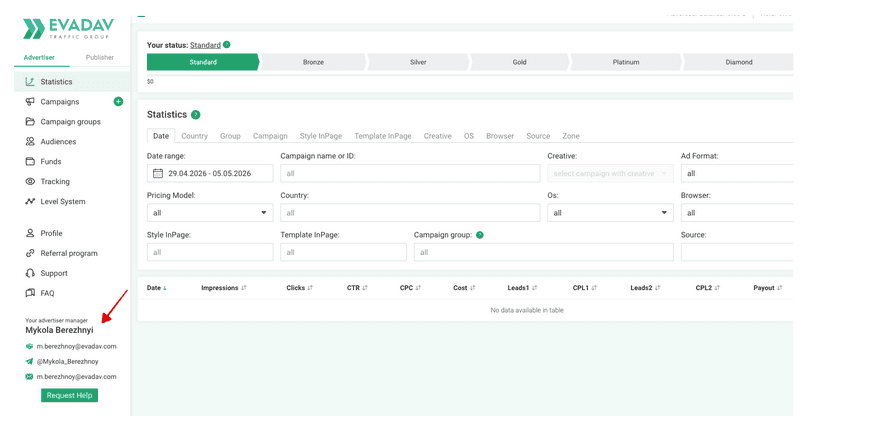
From day one, every advertiser at EVADAV is assigned a personal manager – with no spend cap or access level. You don't need to pay $5,000+ to receive attention and comprehensive support: our managers work with both large teams and newcomers.
What Does This Mean for the Advertising Market?
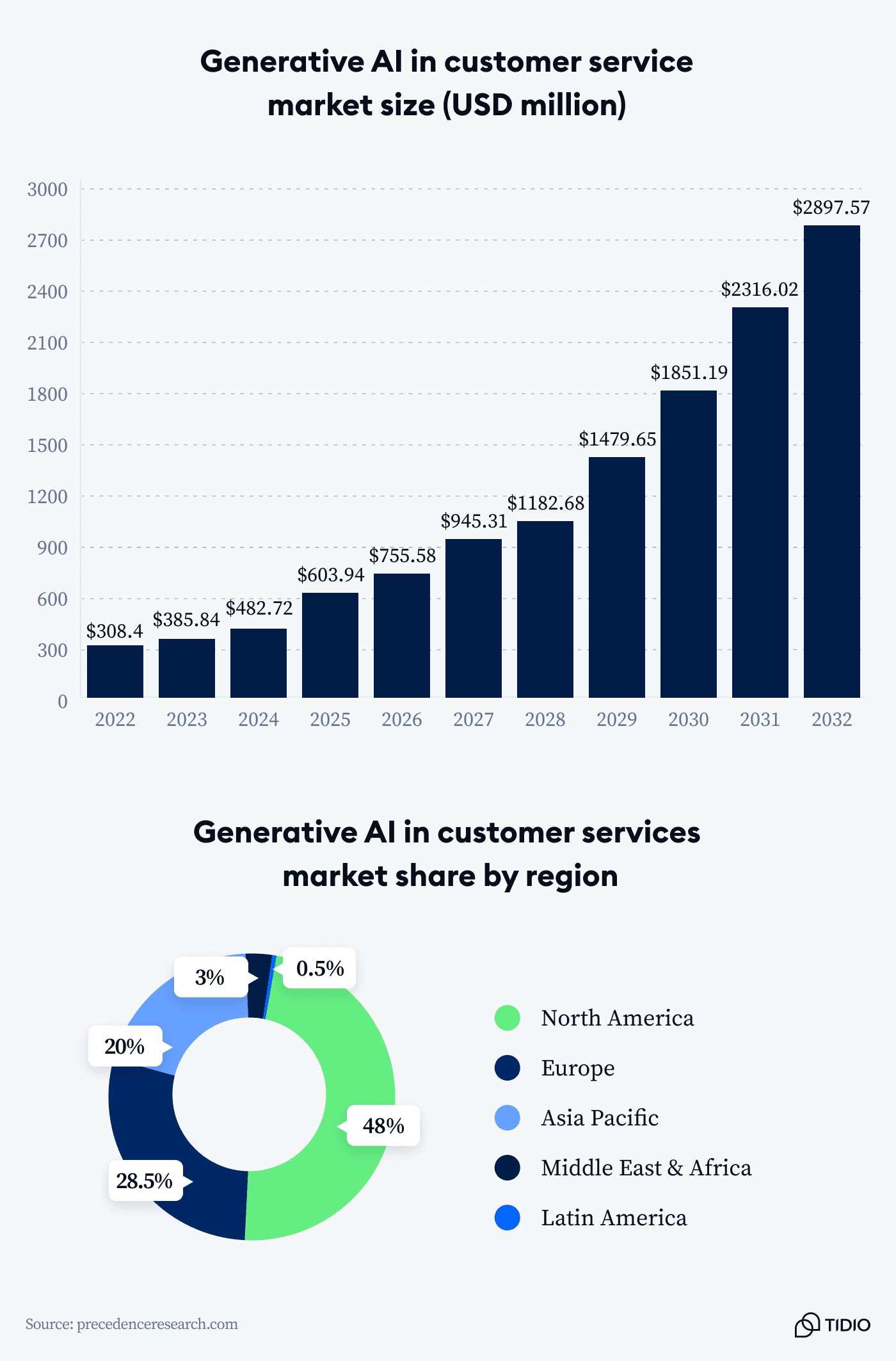
Generative AI in customer service is scaling up rapidly and attracting increasing investment. However, the current pace of implementation and geographic growth suggests that the industry is still in its infancy and not yet a mature standard.
Source: https://www.tidio.com/blog/ai-customer-service-statistics/
It seems logical: if AI is receiving significant investment, then expectations are high, and performance is good. In practice, however, this resilience manifests unevenly, particularly in environments that do not lend themselves to full standardization.
The advertising market is one such area. It changes too quickly: traffic fluctuates, campaigns burn out, sources are unstable, and decisions must be made without hesitation. In such conditions, automation only addresses a portion of the tasks – those that require sufficient data and repeatability.
The problem arises when deviations from the norm occur. The algorithm records the numbers, but it doesn't explain the cause. It can stop a campaign or reallocate the budget, but it doesn't consider the context, such as what is happening with the source, why audience behavior has changed, and whether immediate intervention is required or better to wait.
From what we see in real campaigns, this can manifest as follows:
-
traffic drops for no apparent reason, and the system simply reduces the volume
-
the creative stops converting, but auto-optimisation does not have time to adapt
-
the offer requires manual adjustment, but there is no response from the platform
It is at these points that the limits of automation become apparent. The advertising market isn't abandoning AI – it functions as a complement. However, key decisions increasingly require human intervention: this is where our managers step in, quickly assessing the situation and acting beyond predefined scenarios.
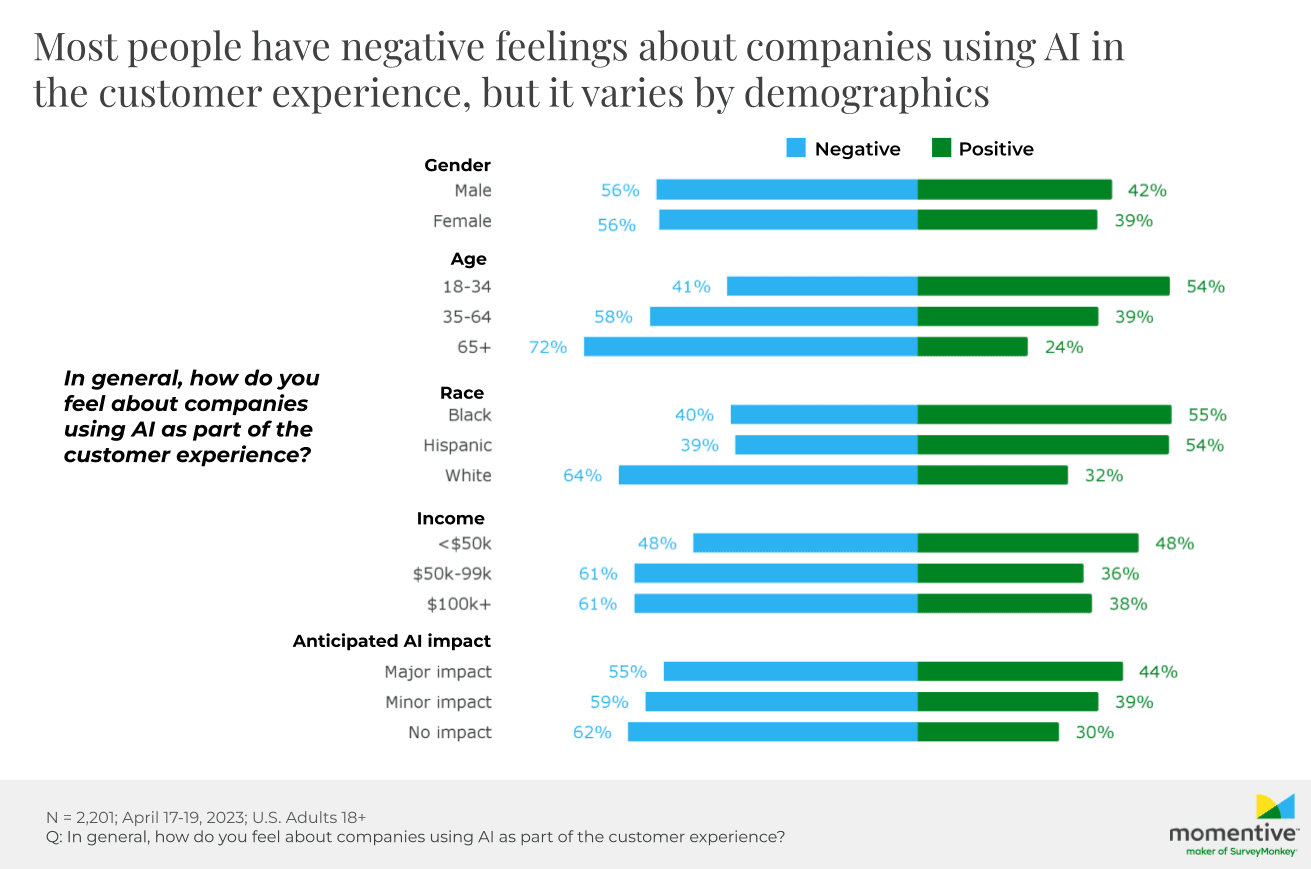
Therefore, attitudes towards fully automated customer service remain cautious rather than neutral. Despite high response rates, users still report a lack of human interaction, particularly when it comes to handling non-standard cases or making on-the-spot decisions.
Source: https://www.surveymonkey.com/curiosity/surveymonkey-research-push-back-ai-customer-service/
Interestingly, perception strongly depends on age and social context: older users are significantly more likely to distrust AI support, while younger users are more relaxed about it. Differences are also evident by income level and demographics – the higher the expectation of service quality, the more acutely the lack of human interaction is felt.
Support Without People: How It Ends
When support becomes completely automated, it ceases to be part of the process and becomes a formality. Answers come quickly, but they don't solve the problem. Issues are closed, but tasks remain.
From what we see in practice, the main limitation here is a lack of flexibility. Any request that deviates from the standard scenario can result in delays to decisions and communication that devolves into repetitive messages. This is particularly problematic when working with traffic, where time is directly tied to money. While the system is processing a ticket, the situation can change.
This often leads to the following consequences:
-
slow response in non-standard cases
-
loss of control over the campaign in an instant
-
the inability to quickly rebuild a strategy
-
the feeling that it is impossible to “negotiate” with the platform
Another problem is the lack of responsibility. Automated support doesn't make decisions; it only follows logic. As a result, no answer is final, and every action requires additional approval.
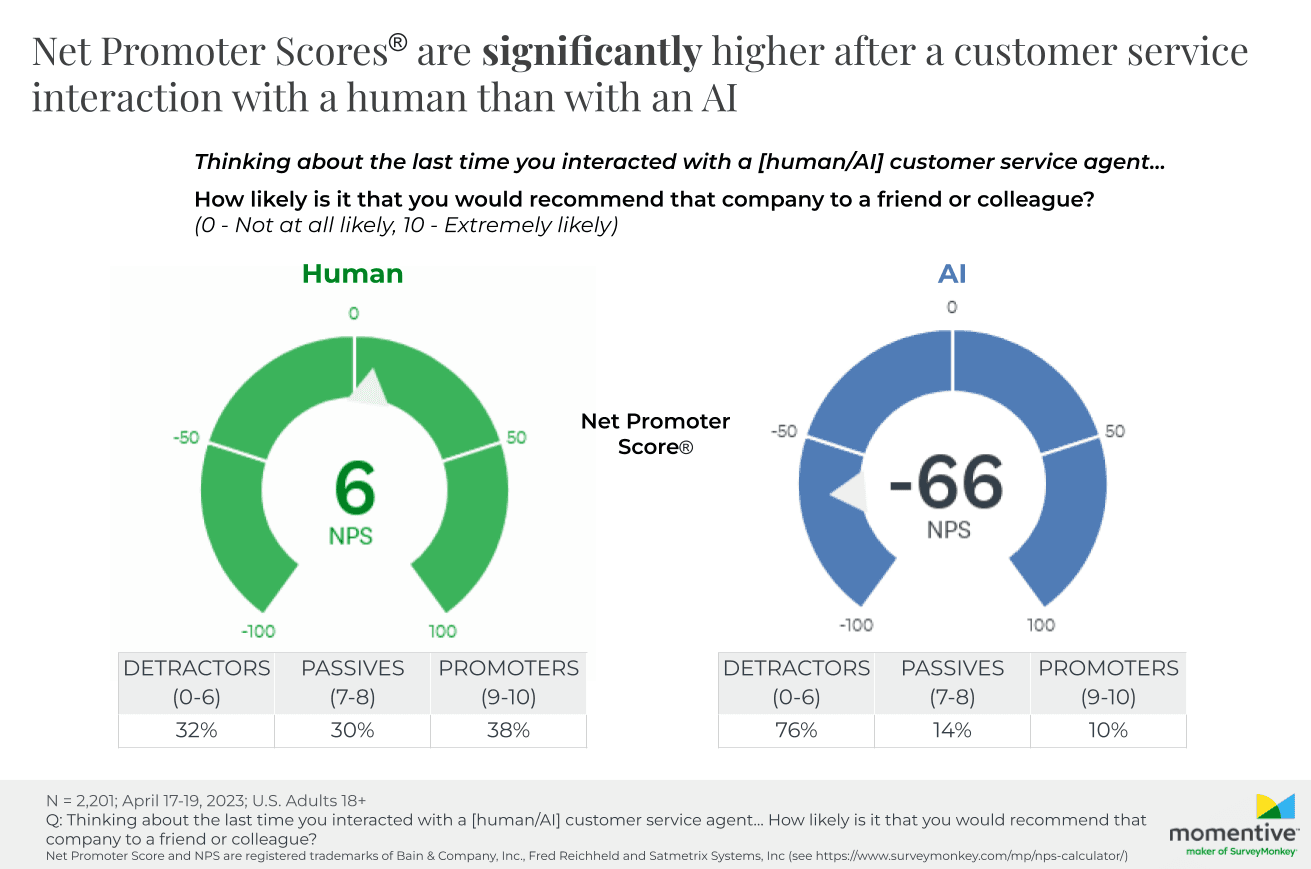
We also see this reflected in user perception: the difference between “soulless” AI and a human service is reflected in SurveyMonkey's research. When interacting with a human, the net promoter score (NPS) is significantly higher than when interacting with automated systems. On average, human support creates a positive experience, while AI-based scenarios tend to be perceived as negative.
Source: https://www.surveymonkey.com/curiosity/surveymonkey-research-push-back-ai-customer-service/
EVADAV Approach: People as a Competitive Advantage
While the market is increasingly moving toward automated support, at EVADAV Ad Network we're consciously focusing on something else: strengthening the role of human managers in working with advertisers. For us, this is about real-world experience: there are too many variables in arbitrage to rely solely on algorithms.
In our daily work, we regularly see situations where automation simply fails. And it's precisely in these moments that the importance of a human being who can quickly understand the situation and make decisions becomes clear.
Support as Part of a Working Link
At EVADAV, communication goes beyond simply responding to enquiries. Our managers work within the advertiser's current context, understanding the sources being used, the goals being set and the risks involved.
We provide a fundamentally different level of interaction:
-
It's not just problems that are discussed, but possible action scenarios too.
-
Decisions can be made more quickly, without the need for lengthy approvals.
-
This enables adjustments to be made to the campaign during the process rather than afterwards.
In fact, support becomes an extension of operational work, rather than a separate service.
Context Instead of Template
The key difference with the live approach is its contextual focus. Rather than just seeing a single ticket, our managers see the entire situation: campaign history, traffic behaviour and previous decisions.
This eliminates the need to explain everything from scratch each time. Issues are resolved more accurately because they don't require adherence to a standard scenario.
Trust as a Result
When a platform is backed by a team rather than a system, the very perception of work changes. A sense of control, predictability and partnership emerges. This becomes a competitive advantage in an environment where technology is roughly the same for everyone, but the level of human interaction is not.
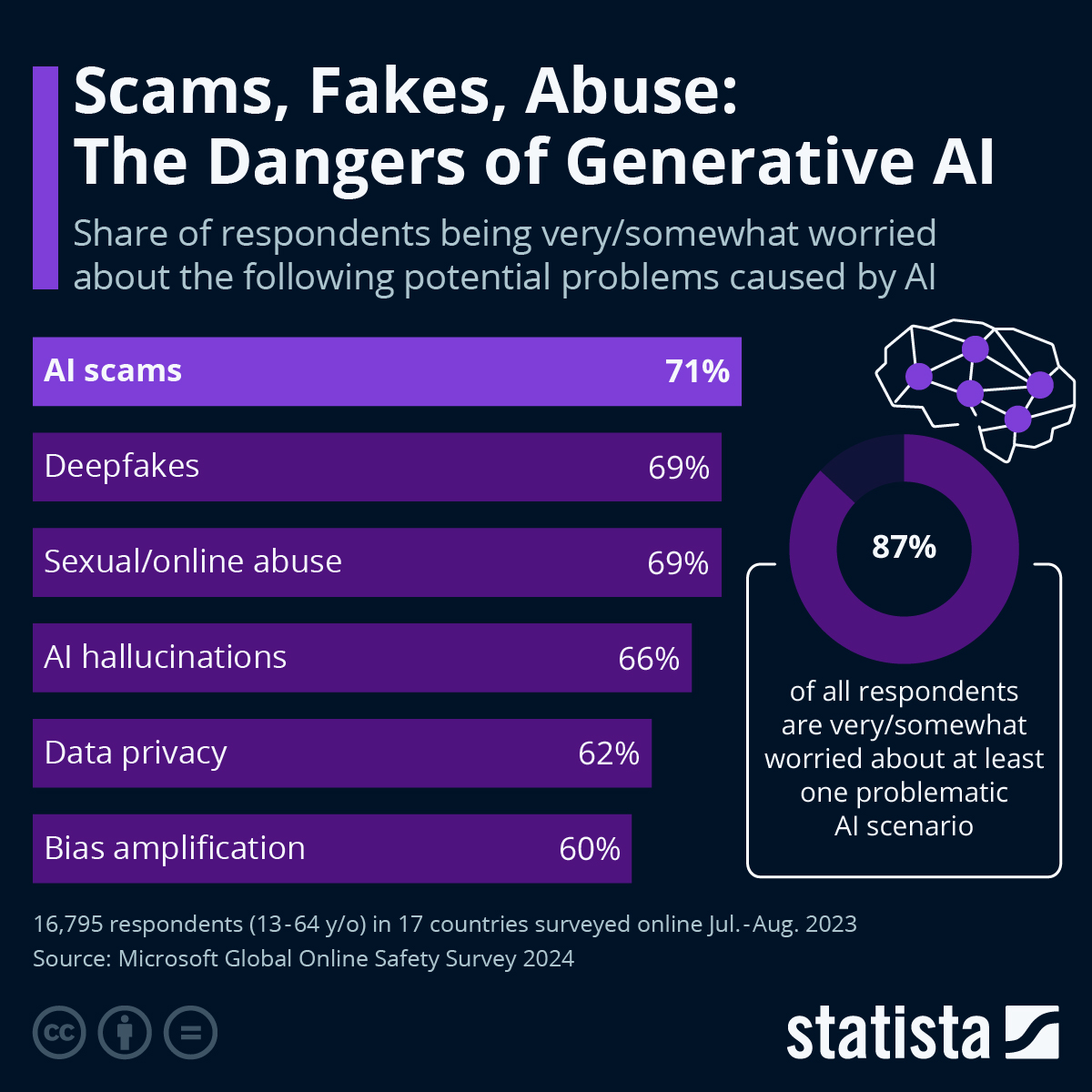
Technologies are developing faster than trust in them can grow, and this is reflected directly in arbitration: the more AI-based solutions that appear, the more careful human oversight must be.
What a Real Manager Can Do
A human manager steps in where data alone is insufficient. In our work, we see this all the time: numbers by themselves don’t explain what’s really happening. That’s why our managers connect data with context – traffic sources, link behaviour, GEO dynamics – and turn it into clear, actionable decisions. This is what actually speeds things up.
Analysis of Non-Standard Situations in Real Time
When a campaign experiences a sharp decline, the system usually just records this and adjusts the volume. Our managers go deeper and look at what’s behind the numbers:
-
compares sources
-
checks adjacent connections
-
takes into account seasonal fluctuations or local changes on the partner's side
For example, traffic might drop only in one GEO while everything else is stable. In that case, the solution isn’t to stop the campaign, but to redistribute the load.
Adjusting Strategy as the Campaign Progresses
The work doesn't end with the launch. Our managers stay involved and adjust the strategy as the campaign evolves. We can shift focus between sources, suggest testing new combinations, and help adapt the offer to how the audience is actually behaving.
Working With Incomplete Information
When working with traffic, you almost never have the full picture. Most of the time, it’s just a set of signals that need to be interpreted quickly. This is where experience matters: our managers make decisions even with partial data, without waiting for perfect clarity.
This is especially important during periods of high traffic volatility, when reacting fast is often more important than waiting for a perfectly accurate analysis.
Fast Communication and Context
Our real managers don’t just pass on information – they translate it into what it actually means for your campaign, removing unnecessary back-and-forth.
As a result, traffic management becomes simpler: decisions are made faster, and changes are implemented without losing time on interpreting raw data.
Conclusion: The Human Factor Is More Important Than Ever
The arbitrage market has long relied on technology. Automation manages traffic flows, algorithms distribute budgets, and systems optimize bids and filter quality. However, as the ecosystem becomes more complex, it becomes clear that stability relies on more than just algorithms. It emerges from interpretation, context, and quick decisions in non-standard situations. This is where the human factor once again becomes critical.
At EVADAV Ad Network, this approach is built into our workflow. We don't just process requests, but explore each user’s unique situation and come up with a tailored solution.
That's why it's important to us that every advertiser receives:
-
a personal manager from day one, without any spending requirements
-
a live person in chat from the first contact, not a bot or templated responses
-
support regardless of experience and volume – for both large teams and newcomers, without the need to spend $5,000+ to attract attention
🫶 Work with a real manager – not a script. Start with EVADAV Ad Network.
In our ad network, Anyone can get a dedicated manager’s support regardless of their spend and registration dates – contacts can be found in the dashboard.